

MiniMax M3.1-Flash-Preview: what is confirmed for MiniMax Code
The official documentation confirms the preview. We explain access conditions and what to check before adopting it.
View the original post ↓Checked against the official sources linked below.
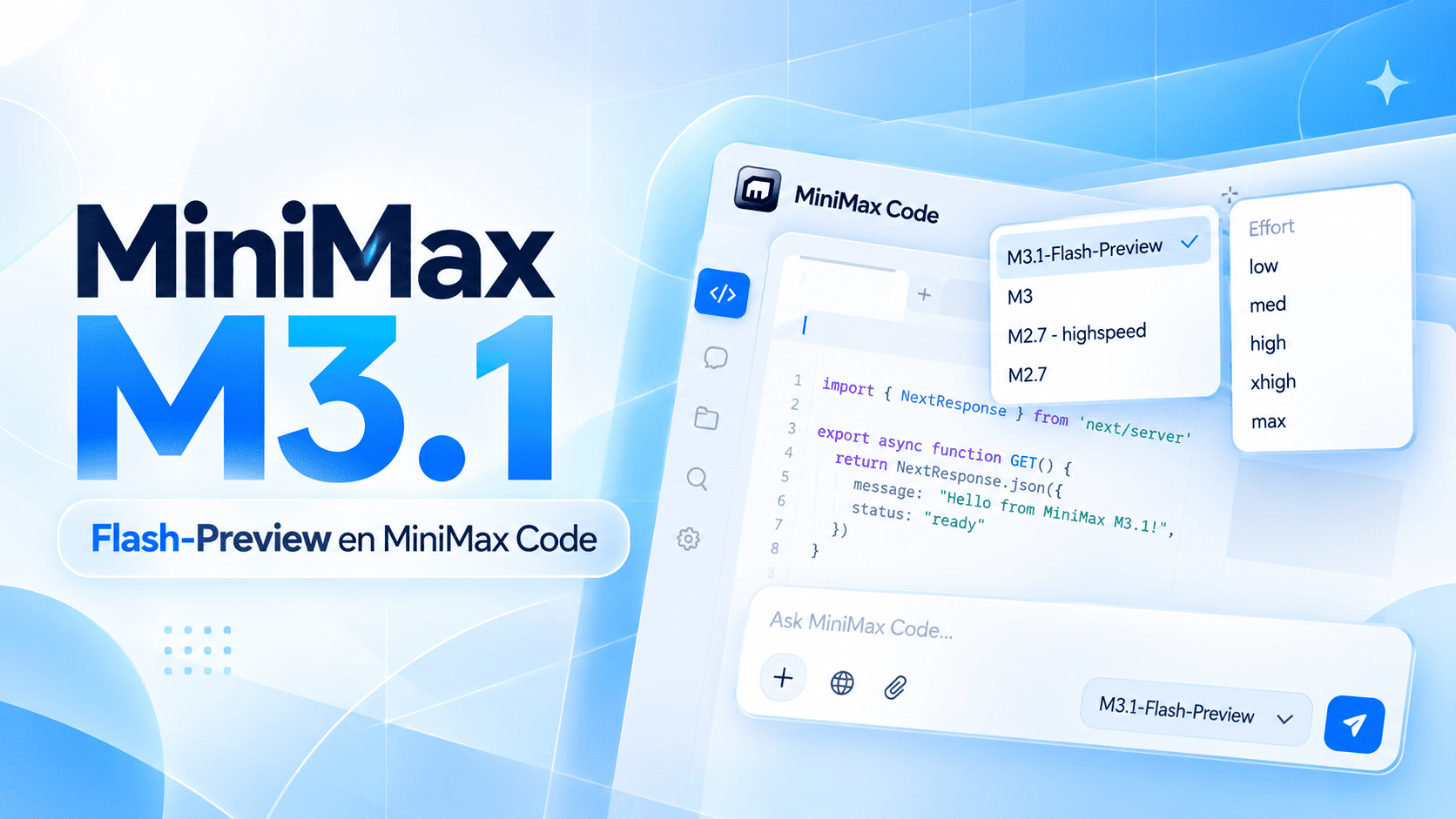
A preview documented by MiniMax
MiniMax confirms M3.1-Flash-Preview for Token Plan and MiniMax Code. It documents a million-token context and low, medium, high, xhigh and max effort; max is the default. These are vendor specifications, not an independent measurement of speed or quality. [1]
Access and billing
The pricing page separates pay-as-you-go API usage from monthly quota subscriptions, each with its own key system. For this preview, check the compatible plan, quota and current price. A general API rate should not automatically be applied to an option available through a subscription. [2]
M3 and M3.1-Flash-Preview are different models
MiniMax maintains a separate M3 presentation with its own evaluation results. Sharing a family name does not justify assigning those results to M3.1-Flash-Preview. This article does not transfer M3 figures or claim the preview is superior to other models. [3]
What I would evaluate before adoption
My editorial proposal for a bounded trial:
- Fix a bug with reproduction steps and acceptance criteria.
- Implement a component with empty and error states.
- Inspect the diff and run the project’s checks.
- Record total time, retries and plan consumption.
A quick answer may still require a long review. The useful result is an accepted, maintainable change. Official availability makes the tool worth considering; choosing it for a client requires evidence from their actual task.
MiniMax’s original September 27 post, embedded below, announces its Code debut. The technical documentation supports availability. The cover is an editorial illustration; the original announcement lets readers consult the vendor’s own communication.