

From campaign click to CRM: design the handoff before buying more traffic
A developer’s view of the landing page, form and CRM handoff that keeps an offer attached to a real enquiry.
This is a design method, not a performance case study. Google Ads documents landing page experience as a Quality Score component and recommends consistent ad-to-page messaging. No sales or ROAS claim is made.
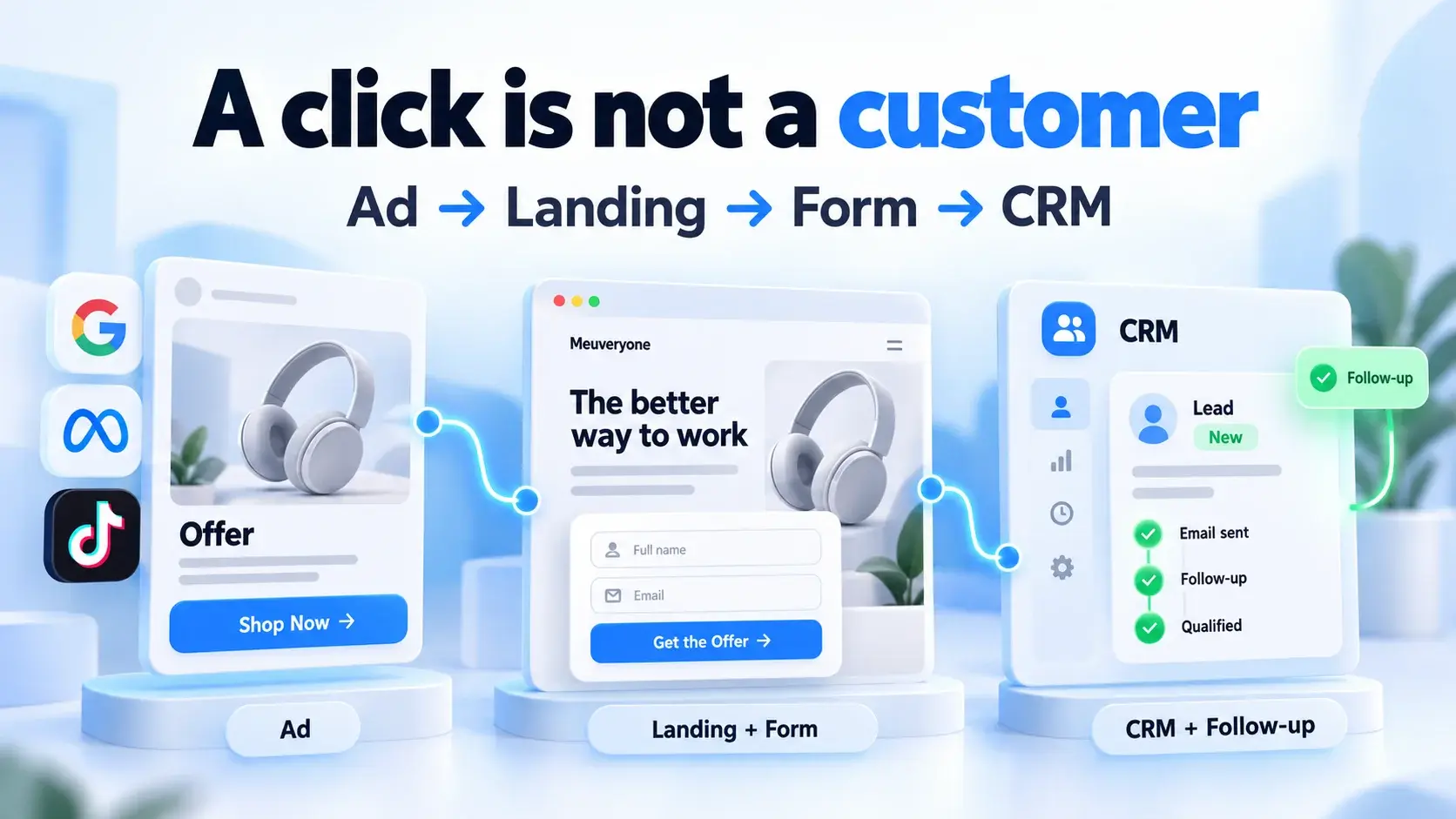
The interface has to carry the promise forward
When an ad names one offer, the first screen of its landing page should make that same offer recognizable. Google Ads’ guidance treats landing page relevance and usefulness as part of ad quality, and recommends keeping the message consistent from ad to page. [1]
From a development perspective, the page must also have one clear action. If the button opens a generic form with no service context, the visitor has to repeat what the ad already knew.
Design the form as a handoff
A minimum viable handoff records:
- The offer or service selected on the page.
- A contact channel and the fields actually needed to respond.
- Campaign source in a hidden field or another explicit, consent-aware mechanism.
- A destination, owner and next action for the enquiry.
For WhatsApp, a pre-filled message can carry the offer. For a form, the submission can create a CRM record with a task. In both cases I would test what happens when a field is missing, a send fails, or the visitor switches devices. A click event alone cannot answer whether anyone replied.
Measure the complete path
A useful review compares landing visits, form starts, completed enquiries with context, and time to the first human response. The ad platform and CRM can disagree about attribution because they answer different questions. Keep the source and conversation record available rather than forcing one number to stand in for both.
Meuveryone’s full guide covers the campaign, page and follow-up sequence for teams in English and Spanish. This note focuses on the implementation handoff. [2] [3]